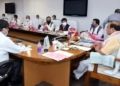
As the Election Commission of India takes steps to enhance electoral transparency and address concerns from political parties, a joint effort between the ECI and representatives from over 28,000 political parties has culminated in a series of 4,719 structured meetings across the country, concluding on March 31, 2025.
The meetings, spanning 25 days, aimed to address pending electoral concerns within the legal framework, including the Representation of the People Act (1950 & 1951), the Registration of Electors Rules (1960), and the Conduct of Elections Rules (1961). With participation from Electoral Registration Officers (EROs), District Election Officers (DEOs), and Chief Electoral Officers (CEOs), the initiative reaffirmed the ECI’s commitment to a free, fair, and transparent electoral process.

According to official data, 40 meetings were chaired by CEOs, 800 by DEOs, and 3,879 by EROs, reflecting the ECI’s emphasis on inclusivity and consultative governance. As instructed, EROs, DEOs, and CEOs worked to resolve issues within their jurisdictions, ensuring adherence to the ECI’s manuals, guidelines, and directives.
State/UT CEOs have been directed to submit an Action Taken Report for further evaluation, with any unresolved issues beyond existing legal provisions to be escalated for consideration by the Commission. This bold initiative has elicited a positive response from political parties, with active participation across Assembly Constituencies, districts, and states/UTs.
As stated by Chief Election Commissioner Shri Gyanesh Kumar, along with Election Commissioners Dr. Sukhbir Singh Sandhu and Dr. Vivek Joshi, the exercise demonstrates the ECI’s commitment to an inclusive and consultative electoral process. In a statement, the ECI emphasized the importance of transparency and accountability in the electoral process, while acknowledging the need to address concerns from political parties. As the country prepares for future elections, the ECI’s commitment to electoral transparency and inclusivity will be crucial in ensuring a free, fair, and transparent electoral process.