The Supreme Court of India issued a pivotal ruling on Friday, compelling the Election Commission of India (ECI) to facilitate online submission of claims by excluded voters during the Special Intensive Revision (SIR) of the electoral roll in Bihar. This directive comes amid growing concerns over transparency and the significant number of voters—approximately 65 lakh—excluded from the draft electoral rolls.
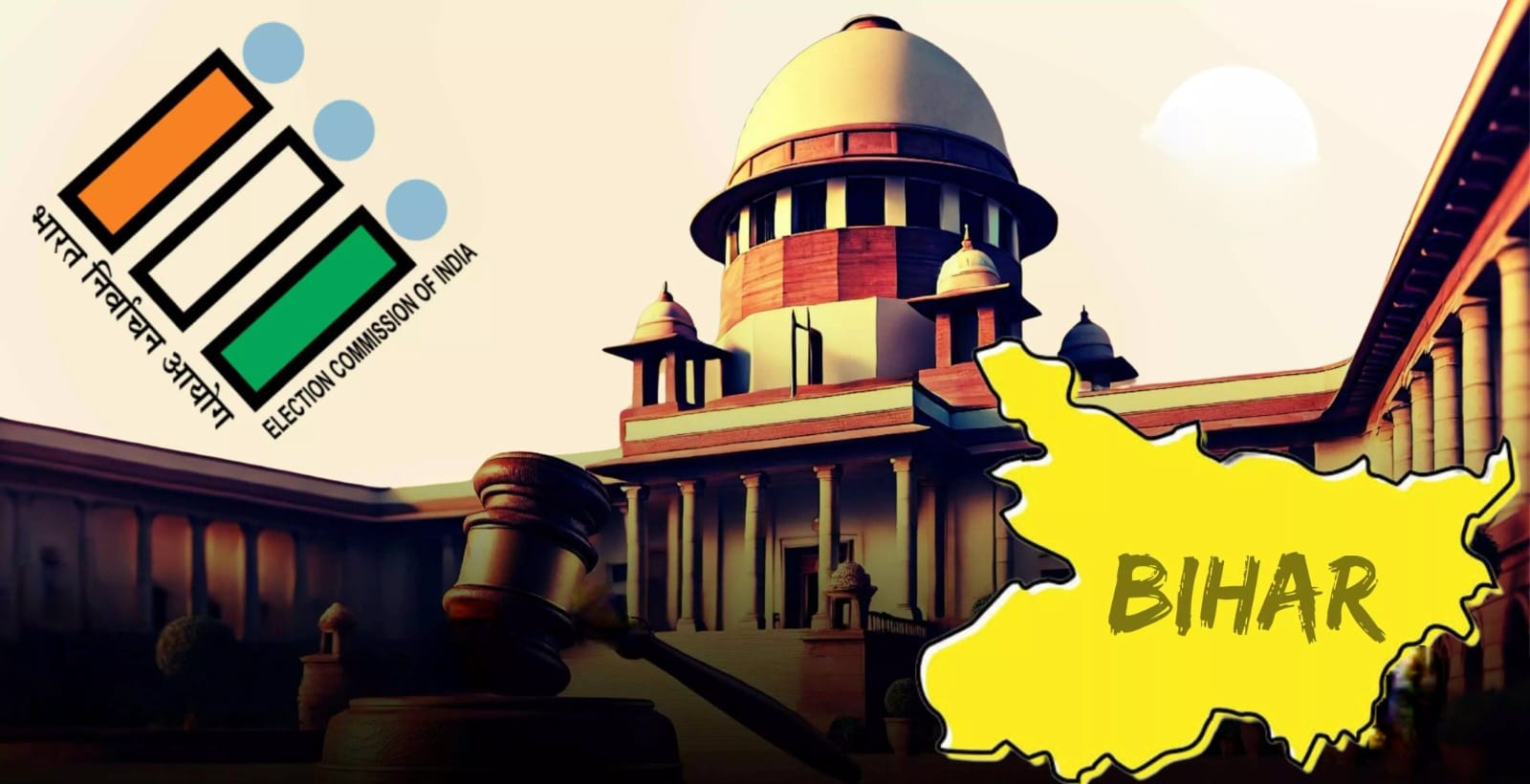
A bench comprising Justices Surya Kant and Joymalya Bagchi ruled that claim forms must be allowed to be submitted electronically in addition to the traditional physical submissions. In a move designed to ease the registration process, the court stipulated that these claims should include an Aadhaar card number alongside one of eleven acceptable identification documents.
Surprisingly, the bench expressed dissatisfaction regarding the lack of engagement from political parties, which have so far not filed objections regarding the 65 lakh voters who have been left out. In an unusual move, the court directed the Chief Electoral Officer of Bihar to include these parties in the ongoing legal proceedings. “All political parties shall file a status report by the next date of hearing on the claim forms they had facilitated for excluded voters,” the bench instructed as it scheduled the next hearing for September 8.
Further embedding its emphasis on transparency, the Supreme Court directed that election officials provide acknowledgment receipts to booth-level agents from political parties who submit claim forms for excluded voters in person. This development aims to build trust and ensure accountability in the electoral process.
During the proceedings, senior advocate Rakesh Dwivedi, representing the Election Commission, requested a 15-day period to demonstrate that no voter had been wrongfully excluded. In response, the ECI reported that around 85,000 individual voters who had been excluded in the draft rolls have submitted claims. Additionally, over 200,000 new voters have registered during the SIR exercise in Bihar, indicating a dynamic engagement from the electorate.
Previously, on August 14, the Supreme Court also mandated the ECI to publish details regarding the 65 lakh excluded voters by August 19 to ensure greater “transparency” in the SIR process. Furthermore, the court accepted the Aadhaar card as a valid form of identity proof for voters aiming to register.
The ongoing revision of the voters’ list in Bihar marks the first substantial update since 2003 and has incited significant political debate. Recent findings from the SIR have notably reduced the total number of registered voters in Bihar from 79 million to 72.4 million, raising critical questions regarding the implications of this sharp decline on the upcoming elections.
The developments underscore a pivotal moment in the electoral landscape of Bihar, with the Supreme Court’s intervention highlighting the importance of transparency and inclusivity in the democratic process.
Key Point:
**Aadhaar will be considered as the only document for inclusion of 6.5 million people who have been excluded from the voter list
**The Supreme Court rejected the BLO’s recommendation for inclusion in the voter list
**Each will receive recognition against the documents submitted
**Persons who have been excluded from the voter list can now apply online
**The political parties will help the people to get their names included in the voter lists