A protest erupted in Manipur’s Churachandpur district as local residents voiced their opposition to the government’s decision to terminate the India-Myanmar Free Movement Regime (FMR). This demonstration was organized by the United Zou Organisation (UZO) and began at the ‘Wall of Remembrance.’ The government’s move to dismantle the FMR and construct a fence along the India-Myanmar border has been met with significant resistance, with protestors highlighting the potential disruption to deep-rooted cultural ties between the border communities.
Prominent figures attending the protest included Saikot MLA Paolienlal Haokip, Henglep MLA Letzamang Haokip, and Singngat MLA Chinlunthang, alongside representatives from various Kuki-Zo tribes. The gathering paid homage to over 250 individuals who have lost their lives in ongoing ethnic violence in the region since May of last year by observing a one-minute silence.
Community leaders from the Kuki Zo Council, Zomi Council, Kuki Inpi Manipur, and Hmar Inpui took the stage to address the crowd, emphasizing the cultural and economic implications of fencing the border. The UZO leaders later submitted a memorandum to Deputy Commissioner Dharun Kumar, directed to Union Home Minister Amit Shah, challenging the decision.
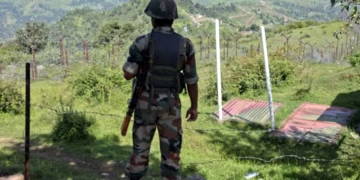
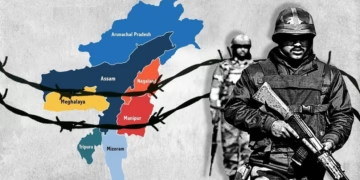
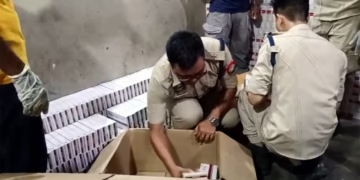
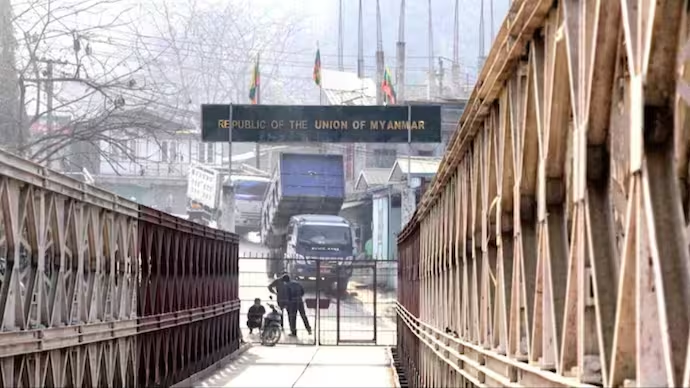
Initially implemented in 2018 under India’s Act East policy, the FMR allowed communities living near the border to travel 16 km into each other’s territory without formal documentation. However, the demand to fence the 1,643-km-long India-Myanmar border, which traverses Mizoram, Manipur, Nagaland, and Arunachal Pradesh, came after allegations from Meitei groups in the Imphal Valley. They claimed that unscrupulous elements exploited the unfenced border for smuggling and illicit activities, thus creating a push for its revocation in February.
This persistent demand for a secure border underlines a complex backdrop of security, cultural ties, and geopolitics in the Northeast.