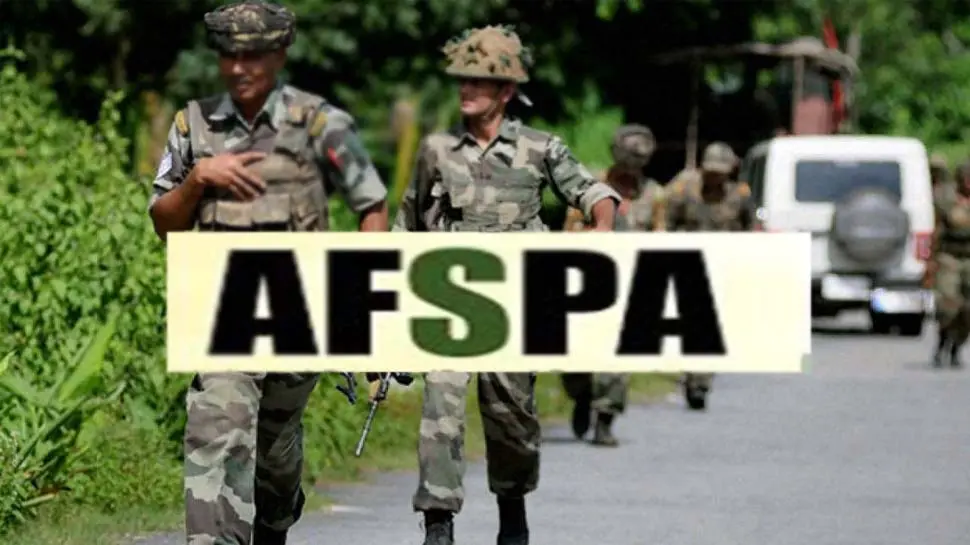

Prime Minister Narendra Modi and Union Home Minister Amit Shah has given a precious ‘Rongali Bihu’ gift to the people of Assam by withdrawing Armed Forces (Special) Powers Act from 60 percent of the state’s territory, Chief Minister Himanta Biswa Sarma said here on Thursday.
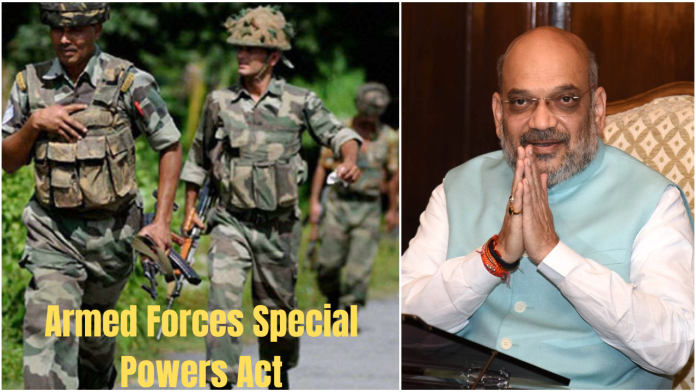 The AFSPA will be in force in nine districts of Upper Assam and the Hill districts along with one sub-division of Cachar district while it will be withdrawn from 23 districts from midnight today, the Chief Minister said while addressing a press conference.
The Act will be in force in Karbi Anglong, West Karbi Anglong, Dima Hasao, Tinsukia, Dibrugarh, Jorhat, Golaghat, Sibsagar and Charaideo along with Lakhipur sub-division of Cachar district, he said.
“This is a historic and bold step taken by the Prime Minister and Home Minister as the Act was in force since 1990 and it was extended 62 times since then by the state government”, he said.
It has been removed from the areas where it is not required any longer and “is in force in areas where the situation is yet to improve to the satisfaction of the government”.
“The situation in these areas are in a transit state and a call will be taken to withdraw from these areas in due time”, he said.
The decision to withdraw the Act was not taken “overnight and neither was it taken due to the demand of any group or organisation. It was taken as there has been a marked improvement in the law and order situation in the state”, the Chief Minister said.
It was a “collective decision taken by both the central and state governments. Assam government was consulted at every step as my frequent visits to Delhi indicated. The state cabinet authorised it , we will issue the notification today and at midnight, the Act will be withdrawn from 23 districts”, he said.
Besides, the Union Home Minister had set a target of achieving this bold step before Bihu and “we can say it is a Bihu gift for the people of Assam”.
“This is, however, just a symbolic step but it has been possible due to people’s desire for peace and development that has made it possible for us to reach this place”, Sarma said.
The withdrawal of AFSPA will also send a strong signal to investors and people who want to work here that the law and order situation was a thing of the past while growth, industrialisation, and economic is the way ahead, he said.
Sarma had earlier welcomed the centre’s decision to withdraw the Armed Forces (Special Powers) Act, 1958 (AFSPA) from 23 districts and partially from one district of the state.
“I wholeheartedly welcome Adarniya PM Shri @narendramodi ji’s decision to withdraw AFSPA from all areas of Assam barring nine districts and one subdivisuon”, the Chief Minister said in a series of tweets.
He also conveyed his gratitude to Union Home Minister Amit Shah “for this great move. Around 60 per cent of the state’s area will now be free from AFSPA’s purview”.
AFSPA has been in force since 1990 and this move marks the beginning of a new chapter in Assam’s future, he said.
“It is a testimony to the significant improvement in law and order in the state.
With peace getting primacy, North East is now on a new trajectory of growth and development”.
He also complimented the people of the state who believe in peace.
“Due to Adarniya PM Shri @narendramodi ji’s visionary leadership, the region is all set to become the new engine of India’s growth – Ashtalakshmi”, Sarma said.
AFSPA is being removed with effect from April One, 2022 completely from 23 districts and partially from one district of Assam
The state was declared a ‘disturbed area’ under AFSPA in the intervening night of November 27-28 1990 and has been extended every six months since then after a review by the state government.
It was last extended for six months on February 28, 2022 after a review of the law and order situation.
Out of Assam’s total geographical area 78,438 sq km, an area of 31,724.94 sq km will remain as ‘disturbed area’ under AFSPA following the withdrawal from 23 districts.
In the North East, the AFSPA was in force in Assam, Nagaland, Manipur (excluding Imphal Municipal Council Area), Changlang, Longding and Tirap districts of Arunachal Pradesh, and areas falling within the jurisdiction of the eight police stations of districts in Arunachal Pradesh bordering Assam.
Civil society groups and rights activists have been demanding the withdrawal of the alleged ‘draconian’ law from the areas in North Eastern states where it has been imposed.