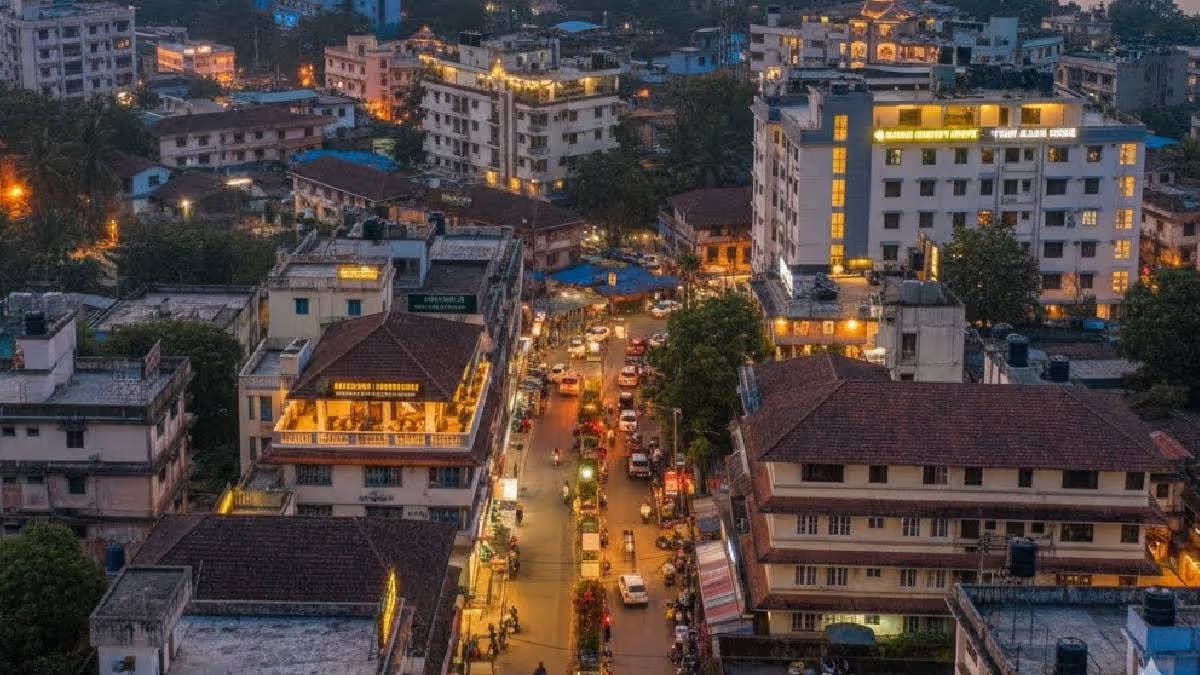

Once celebrated as a beacon of grassroots entrepreneurship and tourism-friendly innovation, Guwahati’s rapidly growing homestay and short-term rental market is now facing significant scrutiny.

What started as an affordable, locally-oriented alternative to hotels has recently turned into a contentious issue, marked by complaints from residents about regulatory failures, disturbances, and even allegations of criminal activities associated with these rentals.
In the initial phase, platforms like Airbnb, and Goibibo created new income opportunities for homeowners. Families welcomed the concept, allowing travelers to find budget lodging while local hosts benefited financially without the burdens of traditional hotels. However, the appeal of these homestays seems to have diminished.
Many of these so-called “homestays” no longer attract tourists. Instead, they primarily cater to local patrons and have marketed themselves as “couple-friendly” or “hourly stay” accommodations. This shift has raised alarms regarding potential illegal activities, including sex rackets, drug dealing, and all-night parties, all masked as temporary stays.
The tension reached a peak at Surva Laxmi Apartment on Rajgarh Link Road, where residents found that one flat, owned by Dr. Moni Pathak Bhuyan, had allegedly been transformed into a commercial homestay called “The Bloomingvine Rajgarh.” The property openly advertised amenities for hourly bookings and late-night gatherings, disregarding its location within a family-oriented housing complex.
Residents expressed feelings of betrayal, as this development significantly altered their living environment. “Families live here, children live here. Suddenly, we were surrounded by strangers at odd hours, loud music, and parties that lasted till morning,” recounted Saswati Bose, a resident. Her husband, Dr. Siddharth Sehgal, further described the situation: “It felt like living above a bar. We never expected this.”
The couple alleges that the property obtained a trade license from the Guwahati Municipal Corporation (GMC) through a questionable No Objection Certificate (NOC) from a Residents’ Welfare Society purportedly established by absentee landlords. Despite numerous complaints, the GMC continued to renew the license without conducting any physical inspections.
Their troubles began in June 2024, shortly after they bought a flat. They quickly noticed disturbances from the flat above, which they claim was operated by Dr. Moni Pathak Bhuyan and her husband. Repeated attempts to address the issue with the owners went unanswered. Consequently, they filed a formal complaint at the Geetanagar police station in January 2025.
When no action was taken, they turned to the GMC, leading to a hearing on March 11, where the flat owner failed to appear. Finally, on April 4, 2025, the Mayor-in-Council revoked the trade license of The Bloomingvine, temporarily relieving residents. However, this relief was short-lived as the homestay continued to operate unimpeded.
In a surprising twist, after filing another complaint in June 2025, the owners obtained a new trade license with erroneous information. That same day, police visited the property and confirmed its operation within a residential area but took no decisive action. Instead, the case was handed to an unrelated department, leaving the couple bewildered.
Frustrated, they sought the Mayor’s intervention again in July 2025, who revoked the license upon reviewing the dubious documents. However, when they tried to meet the GMC Commissioner, they were denied access.
Instead, they received a hearing notice from a Joint Commissioner, who allegedly dismissed Saswati’s concerns and demanded proof of illegality, despite the license being revoked twice.
“It was humiliating. Instead of helping us, the authorities treated us like the troublemakers,” Saswati recalled.
Feeling defeated, the couple reached out to high-ranking GMC officials regarding their complaints, but received no responses. A sudden call from GMC in September summoned them to another hearing, but upon requesting a written notice, the official was evasive.
Days later, a GMC official finally visited their home with an order that raised more questions. “This is how the system operates-files are delayed, dates altered, and citizens suffer endlessly,” lamented Dr. Sehgal.
The struggle at Surva Laxmi Apartments reflects a larger trend in Guwahati, where residents are increasingly alarmed by the proliferation of homestays in residential areas, often legitimized by questionable licenses.
Locals argue that the GMC’s online licensing system, meant for efficiency, has instead created opportunities for exploitation. Without proper physical verification, many residential units are transformed into commercial accommodations, leaving neighborhoods vulnerable to crime, noise, and safety concerns.