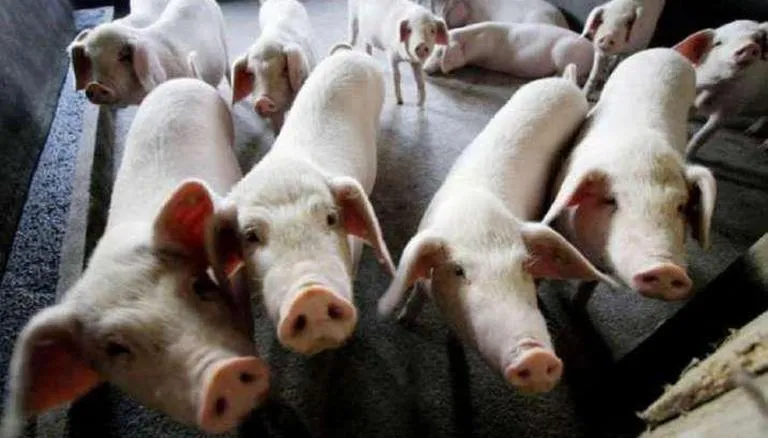

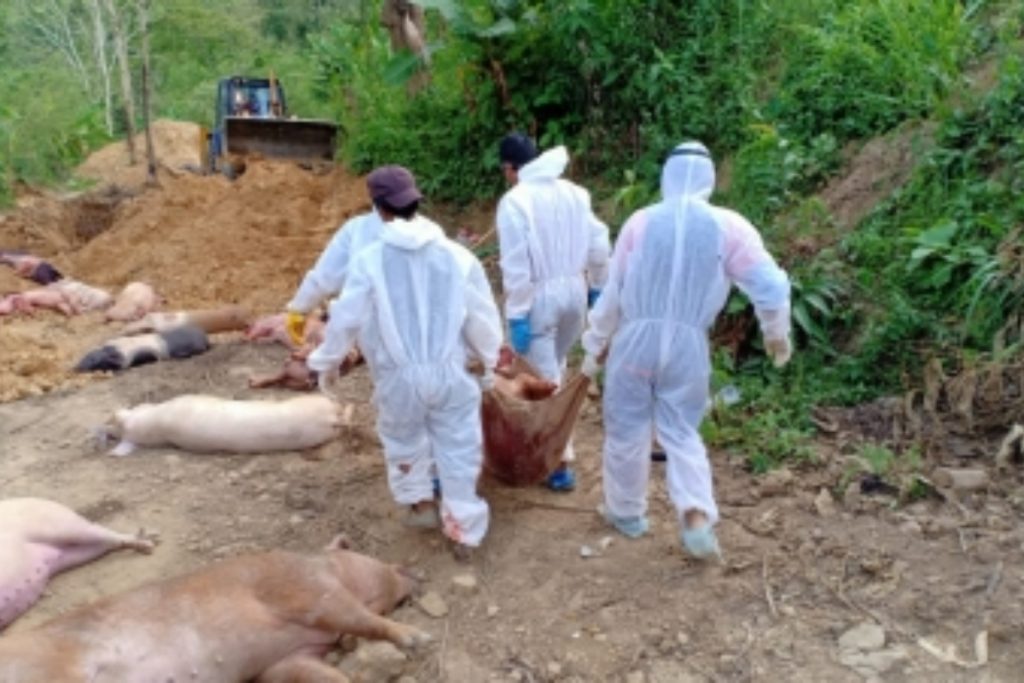
More than 40,000 pigs have died due to the deadly African Swine Fever (ASF) across Assam since outbreak of the disease in early 2020, affecting over 14,000 farmers, Animal Husbandry & Veterinary Minister Atul Bora said on Tuesday.
 Addressing a press conference here, Bora said that around 900 pigs have died since January 2022, indicating relapse of the virus, mainly due to the massive flood this year.
 “This is a deadly disease and the mortality of pigs is 100 per cent. At present 22 districts are affected in ASF with 72 epicentres. Since March 2020, 40,482 pigs have died due to ASF and 14,005 pig farming families are affected,” he added.
The government culled 1,378 pigs spread across 27 epicentres to contain spread of the disease in the state, he added.
In September 2020, former Assam Chief Minister Sarbananda Sonowal had ordered to cull nearly 12,000 pigs in the areas affected by the ASF and had asked officials concerned to compensate the owners adequately.
“We have also launched a compensation scheme to the affected families and the government has so far spent Rs 1.48 crore to the farmers whose pigs have been culled. There is no scope to compensate for the pigs dying naturally due to ASF,” Bora said.
He also said that the pigs are culled within three days after the spread of ASF to a particular location and compensation is paid to the farmer within 10 days.
“A high-level committee is formed to monitor the situation and take controlling measures. As of now, pork meat sale is banned in Tinsukia and Sivasagar districts, which have all the current epicentres,” Bora said.
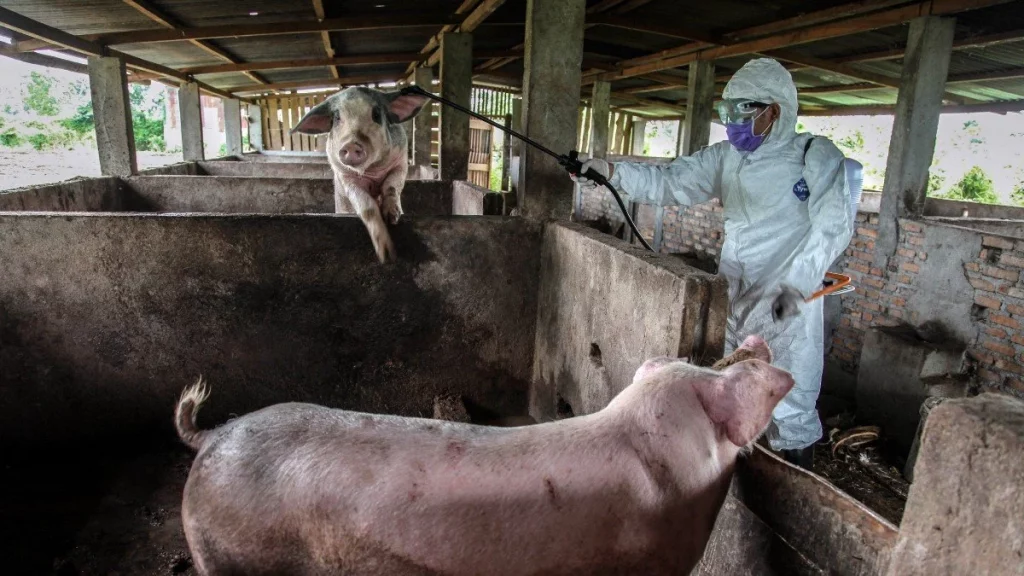
The government has formed 427 rapid response teams and launched an extensive awareness drive to sensitise the pig farmers against spread of the ASF, he added.
The African Swine Fever, which was first detected in India in Assam in February 2020, is a pig ailment. It was first reported in 1921 in Kenya, Ethiopia and the problem is very rare in this part of the country.
While swine flu can spread from animals to humans, swine fever does not, and therefore is not a public health threat.
The Minister also stated that in order to bring back the pig farming sector to its heydays, a series of programmes are planned in association with International Livestock Research Institute (ILRI), Food and Agriculture Organisation (FAO) and Office International des Epizooties (OIE).
A pig processing centre with a daily capacity to process 400 pigs is ready at Nazira in Sivasagar district but it is not inaugurated due to the sudden outbreak of the ASF in the region, he added.
The state produced 20.88 tonnes of pork meat in 2020-21 and this meets only 60 per cent of the consumption demand. The rest comes from outside Northeast, Bora said.
The pig population in the state is estimated to be around 20 lakh, excluding the wild boars roaming in different forests, he added.
Speaking about the impact of the recent flood on the agriculture sector, Bora said that 2.5 lakh hectares of crop land were damaged and most of these are covered by silt.
“We are focussing on community nurseries with a focus on flood hit areas. We are also focussing on Rabi crops as the kharif season is affected by the flood. We have sanctioned Rs 25 crore for that and sought an additional Rs 53 crore from the SDRF,” he added.
Bora also said that 44.12 lakh cattle and poultry were affected in the flood and more than 46,500 died due to the deluge.